Why Do We Celebrate the Offering of the Bodhicaryāvatāra
— and Who Was Śāntideva?
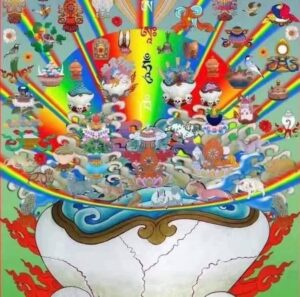
This year, a new event has been introduced by Ranyak Patrul Rinpoche: the Offering of the Bodhicaryāvatāra, a special day of practice established by the great Dza Patrul Rinpoche.
So who was Śāntideva, and why does his work inspire such a celebration? Śāntideva lived in India in the 7th–8th century CE. He was a scholar-monk at Nālandā, the great monastic university of ancient India, but his fellow monks considered him a lazy monk and decided to embarrass him publicly.
During a ceremonial assembly, they asked Śāntideva to teach, expecting him to fail. Instead, he spontaneously pronounced one of the most profound and beloved texts in the entire Buddhist canon: the Bodhicaryāvatāra — “Entering the Way of the Bodhisattva.” According to traditional accounts, as he reached the ninth chapter on wisdom, he rose into the air and vanished, his voice continuing until the teaching was complete. His words have been treasured ever since.
The Bodhicaryāvatāra is a guide to living the life of a bodhisattva — a being who dedicates themselves to the liberation of all sentient beings. Chapter 2, which forms the basis of our offering practice, is devoted to the ritual of offering and a training in devoting ourselves to all beings. Therefore, every year on the 4th day of the 6th month, we gather in this spirit to let ourselves be imbued with this precious teaching that has guided practitioners for over a thousand years.